
PEX vs Copper for Whole-Home Repiping
Both PEX and copper can be code-compliant for whole-home repiping in Cypress and Houston. PEX is flexible and often faster/less invasive; copper is time-tested and preferred by some owners. Choose based on layout, budget, and exposure—not slogans.
Reviewed by Tony's Plumbing licensed technicians · Master Plumber License #40815 · Last updated
What makes this page different: Texas freeze + slab access practicalities.
Cost and labor differences
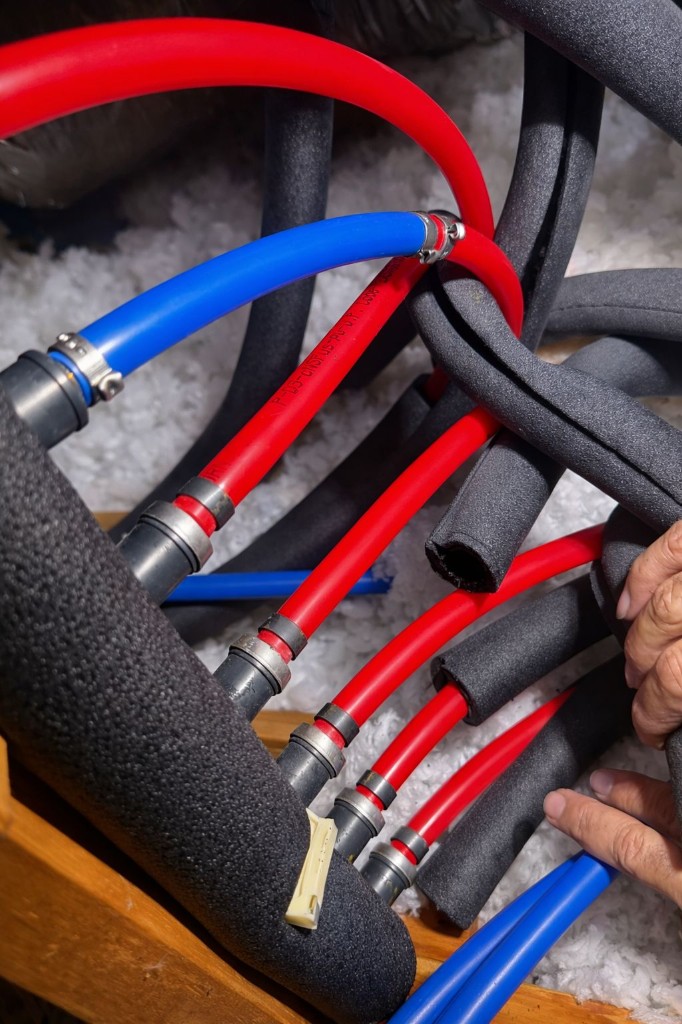
PEX home-run layouts often finish faster in Northwest Houston attics because flexible tubing snakes around trusses with fewer wall penetrations than rigid copper sweats. Labor hours skew toward fewer openings and less soldering—but manifold placement and support spacing still require skilled planning.
Copper repipes demand more joint work and sometimes more drywall access when paths are tight behind kitchen islands or second-story wet walls. PEX uses fewer fittings per run in open attics; copper carries more solder joints and heavier handling. Tony's Plumbing compares total project time and finish disruption—not slogans—when you are choosing between systems.
Joints, leaks, and longevity
PEX crimp and expansion fittings have decades of field history when installed with calibrated tools and inspected connections. Copper sweats fail at joints when acid flux or overheating weakens the bond—yet properly soldered copper remains the reference standard many inspectors and longtime owners trust.
Galvanic transitions between materials need dielectric unions or approved separation wherever copper meets steel nipples. We map every coupling so your Champions or Coles Crossing repipe does not develop pinholes at mixed-metal boundaries five years later.
Freeze and UV considerations
Texas freezes are rare but severe—2021 proved that exposed hose bib branches and attic lines in unconditioned spaces can split when homeowners forget to drip and insulate. PEX expands slightly before rupture in some conditions; copper is unforgiving but predictable when insulated correctly.
UV degradation matters only where tubing would see sunlight—garage windows and outdoor runs need sleeving or copper. Slab-on-grade Cypress homes with attic distribution dodge most UV risk; pier-and-beam pockets near crawl vents need material choice and routing reviewed on site.
How we help you choose on-site
Tony's Plumbing walks your attic, crawl, and fixture count before recommending PEX manifolds, copper trunk-and-branch, or a hybrid where rigid risers meet flexible drops. Water chemistry, HOA resale expectations, and how much drywall you are willing to patch all feed the decision.
You leave with a material recommendation tied to your floor plan—not a generic blog answer. Call (832) 890-8449 to schedule a Cypress or Houston repipe consult and we will explain labor, joint strategy, and freeze exposure for your specific layout.
FAQ
- Does PEX freeze differently than copper in Texas?
- Texas rare freezes still burst poorly insulated lines on exterior walls. Neither material eliminates freeze prep in Cypress and Houston homes.
- Do PEX fittings leak more than copper sweated joints?
- Copper sweats are time-tested but can fail at joints under vibration. Tony's Plumbing uses manufacturer-approved fittings and tests pressure before closing walls on any repipe.
- Can you mix PEX and copper in the same repipe?
- Mixing materials is code-compliant with proper adapters—not improvised threading. We map transition points so future service is straightforward.