
Trenchless vs Traditional Sewer Repair
Trenchless sewer methods can reduce yard damage when pipe diameter, condition, and access allow. Traditional excavation remains necessary for collapses, severe offsets, or unsuitable hosts. A camera inspection—not a sales pitch—decides candidacy.
Reviewed by Tony's Plumbing licensed technicians · Master Plumber License #40815 · Last updated
What makes this page different: Candidacy checklist over marketing trenchless as always better.
Trenchless options in plain language
Cured-in-place pipe lining inserts a resin-saturated sleeve that hardens inside the old host, sealing cracks and smoothing offsets when the existing pipe still has structural roundness. Pipe bursting pulls a new HDPE line through while fracturing the old clay or cast host, upsizing diameter in the same path.
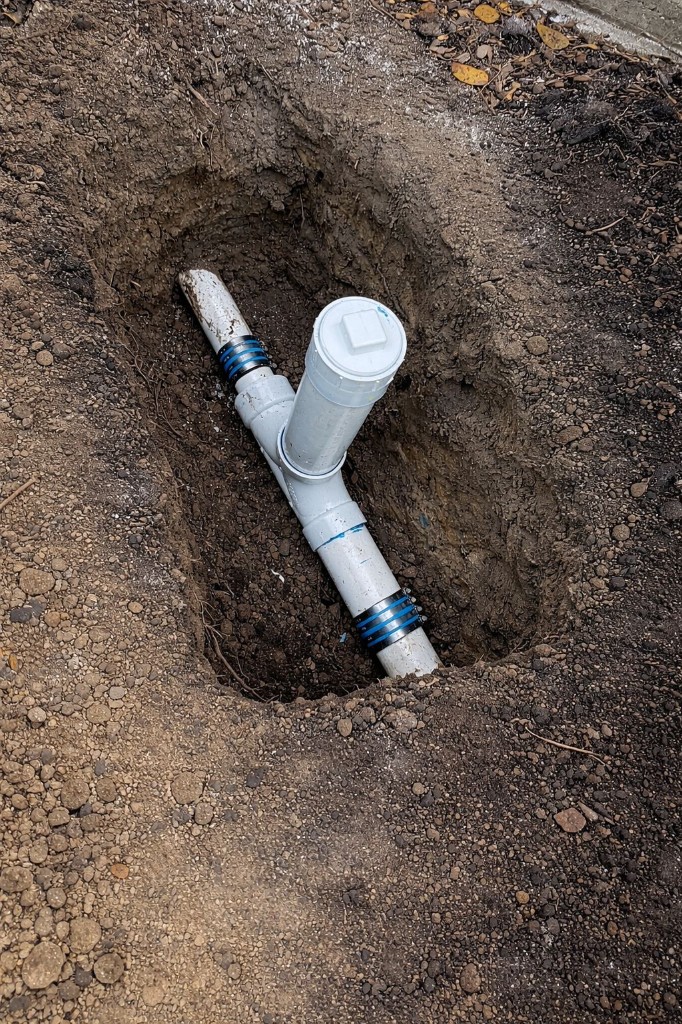
Both methods use small access pits instead of a continuous open trench from house to city tap—when the line qualifies. Tony's Plumbing explains which technique fits your material and depth after camera review, not before.
When open dig is required
Collapsed pipe, severe belly sections that need regrade, and lines with multiple tight offsets often cannot accept lining or bursting. Houston clay that has shifted under a driveway may need traditional excavation to restore proper slope toward the municipal main.
Utility conflicts, shallow depth, and fragile neighbors' lines also push toward open dig with locates and careful shoring. Honest candidacy beats promising trenchless on every Lakewood Forest or Bear Creek lateral just to win the bid.
Yard and driveway tradeoffs
Trenchless minimizes sod disruption and can spare a stamped concrete driveway—restoration costs and HOA photo standards matter in master-planned Cypress communities. Open dig gives direct access for grade correction and full-diameter replacement when lining would merely cover a belly that still holds water.
Mature landscaping and pool deck proximity weigh into pit placement. We plan access so irrigation repairs and fence sections are accounted for before the first shovel, whichever method the video supports.
Questions to ask any plumber
Ask for camera footage, candidacy limits in writing, who handles restoration, and whether permits and inspections are included. Request clarity on what happens if the host pipe fails mid-lining—reputable contractors explain exit plans before work starts.
Tony's Plumbing welcomes those questions on every Houston and Cypress sewer project. Call (832) 890-8449 for trenchless versus traditional guidance backed by video—you deserve method choice based on your line, not a one-size marketing pitch.
FAQ
- What disqualifies a Houston sewer line from trenchless repair?
- Trenchless is a tool, not a universal fix—camera candidacy comes before method selection. Tony's Plumbing recommends open dig when trenchless would fail mid-project.
- Is trenchless sewer repair always faster than traditional dig?
- Speed depends on length, depth, and yard obstacles. We compare calendar time and restoration cost honestly for Houston HOA yards.
- Do HOAs prefer trenchless sewer methods?
- HOA preference never overrides video evidence of unsuitable pipe. We document restoration plans either way so your architectural committee has what it needs.